
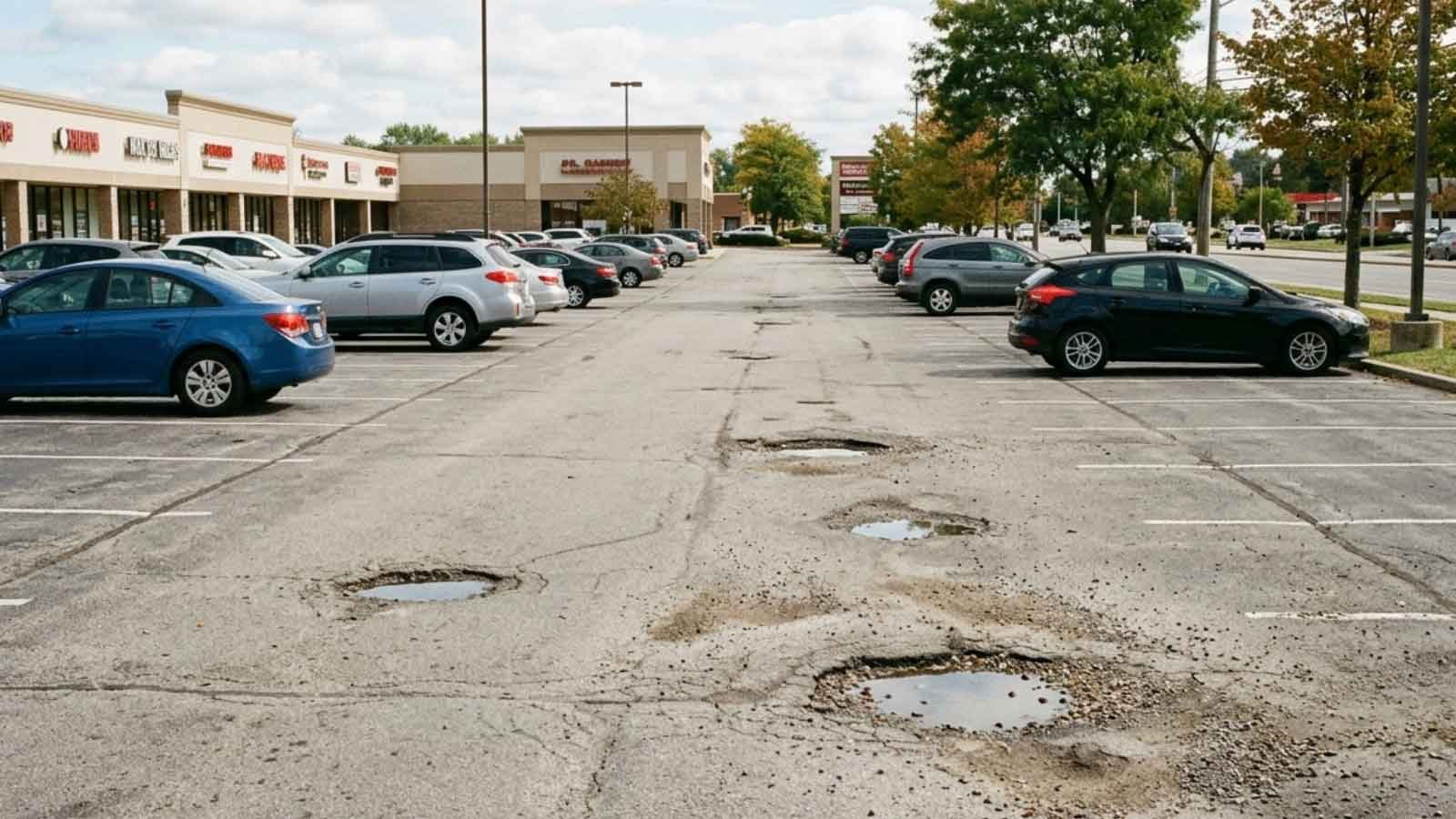
Water intrusion is the leading cause of potholes in commercial parking lots, but it rarely acts alone. Potholes form when water, traffic loading, and a weakened base combine to break down pavement that has already started to crack. The hole you see on the surface is the final stage of a problem that began beneath the surface weeks or months earlier.
If your lot keeps developing potholes no matter how often you patch them, the cause sits below what you can see. Understanding how these factors interact helps you make the right call before approving another round of commercial asphalt repairs.
What Is The Number One Cause Of Potholes In Parking Lots?
Water is the primary contributor. It works as a catalyst, weakening the structure so that traffic and time can finish the job. Sun, heavy loads, and a poorly built base all play a part, but water is what turns a small surface crack into a structural failure.
The damage comes down to where the water goes. Asphalt is only the top layer of a system. Below it sits a compacted aggregate base that carries the real load, and once water gets past the surface, that base is what pays the price.
The Failure Chain From Crack to Collapse
Potholes follow a predictable sequence once the surface opens up:
- A surface crack forms due to age, sun exposure, or fatigue from repeated traffic.
- Water enters during rain or washing and travels down to the base.
- The base weakens as water washes away the fine material that binds the aggregate. How fast this happens depends on the base: a well-compacted, well-drained foundation resists it for years, while a poorly built one fails quickly.
- A void forms where solid support once stood.
- The surface collapses under vehicle weight, and the pothole appears.
This sequence is the reference point for everything below. Each cause that follows either opens the door at step one or accelerates the steps in between.
Why Atmospheric Rivers Make SoCal Lots Vulnerable
Southern California does not get the freeze-thaw cycle that drives potholes in colder regions, where trapped water freezes, expands, and splits pavement over a long winter. Our threat is about timing and intensity instead.
Lots here bake dry for months and crack under constant heat. Then an atmospheric river arrives and drops a season's worth of rain in a few days. A well-maintained lot sheds that water. A neglected one, already cracked and worn, takes on more water in that short window than its drainage can handle. The storm does not create a new kind of damage. It runs the failure chain at high speed, which is what causes asphalt to deteriorate so suddenly on lots that coasted through the dry season.
What Else Breaks Down Asphalt Besides Water?
Water needs help to create a pothole, and three forces supply it. Each one either creates the cracks, water exploits, or speeds up the breakdown once water is in.
UV Oxidation Makes Asphalt Brittle
Asphalt is held together by a petroleum-based binder, and sunlight ages that binder. Constant UV exposure dries it out and strips away its flexibility.
Brittle asphalt cracks under stress that fresh pavement would absorb. In a region with year-round sun, this happens faster than most owners expect, and every new crack is another way for water to get in.
Heavy Vehicle Loads
Commercial lots carry weight. Delivery trucks, trash trucks, and forklifts concentrate force on small contact points.
That repeated loading fatigues the asphalt and is usually what finally breaks open a spot already softened from below. Turn lanes, loading zones, and dumpster pads fail first because they take the most weight.
Weak Base Compaction
Some lots are vulnerable from the day they are built. When a contractor skips proper compaction or rushes subgrade preparation, the foundation never reaches full strength.
A poorly built base settles unevenly and gives out early, no matter how clean the surface looks. It is the difference between the failure chain taking a decade and taking a single wet season.
Why Do Potholes Keep Coming Back After Repairs?
Because a surface-only patch never touches the weak base underneath. The chain ends in a void below the asphalt, and a repair that fills only the visible hole leaves that void and the loose material around it exactly where they were.
A quick patch compacts fresh asphalt into the opening, making it look finished. Traffic works its way loose within weeks, the unstable ground shifts, and the pothole returns in the same spot or beside it. A repair is only effective when it reaches the base, clears the failed material, restores drainage, and rebuilds the foundation before the surface is put back in place. Once that kind of damage spreads across enough of the lot, spot repair stops making sense, and that is when damage goes beyond patching and resurfacing becomes the smarter spend.
How Are Commercial Potholes Repaired?
The right method depends on how deep the damage goes and how long the fix needs to last. Knowing the options helps you judge whether a contractor's bid matches the actual problem:
- Hot Mix Asphalt is our asphalt company’s standard for permanent pothole repair. The crew saw-cuts the damaged area to clean the edges, removes the failed material, addresses the underlying base condition, and fills it with properly compacted hot mix bonded to the surrounding pavement. This is what ends the patch-on-patch cycle.
- Full-depth patching goes further when the foundation itself has given out, rebuilding both the base and the surface down to stable ground. This is the method for recurring damage that surface repair cannot fix.
How Do I Prevent Potholes In A Commercial Parking Lot?
Prevention works by closing off the surface before water ever gets the chance to do its damage. Two technical steps handle that, in order of priority.
Start With Drainage
Drainage comes first, because no surface treatment can compensate for a lot that holds water. Standing water after a storm is the clearest sign of a drainage problem.
A proper slope directs water toward catch basins and away from the pavement instead of letting it pool. If your lot has low spots that stay wet, correcting the grade and clearing the catch basins protects the pavement more than any patch can.
Seal Cracks and the Surface
Once water drains correctly, sealing keeps it out of the pavement:
- Crack sealing fills surface cracks with a flexible material that blocks water right where it would enter. Done on time, it stops the failure chain at step one.
- Sealcoating coats the whole surface, shielding the binder from UV, water, and chemical spills. Most commercial lots need it every three to five years.
Catch Problems Early
Cracks are not the only early warning. Raveling, where the surface sheds loose aggregate and looks worn, and alligator cracking, a web of interconnected cracks, both signal trouble before any pothole appears. Spotting them early is the cheapest possible point to act.
Read More: How Often Should I Get Parking Lot Maintenance Done?
The Financial Case for Acting Early
Prevention is not only the sounder engineering choice but also the cheaper one. Crack sealing and sealcoating are among the lowest-cost services on a parking lot maintenance plan. Waiting for a pothole means paying to excavate and rebuild, usually across a far larger area than the visible hole, instead of paying to seal a crack. Owners who stay on a maintenance schedule spend less over the life of the lot and avoid the downtime and liability that come with emergency repair.
Read More: How Much Does It Cost to Repave a Parking Lot?
Who Is Responsible For Potholes In A Parking Lot?
The property owner. Under California premises liability law, owners have a duty to keep their property, including the parking lot, reasonably safe for the people who use it.
A pothole that trips a customer or damages a vehicle can expose the owner to a liability claim. Courts generally look at whether the owner knew or should have known about the hazard and failed to act within a reasonable time. A neglected lot with obvious, long-standing damage is a weaker position than one with a documented maintenance record. Staying ahead of parking lot liability through regular upkeep protects your visitors and your business. This is general information rather than legal advice, so consult an attorney about your specific situation.
Repair Pothole Damage Before It Spreads
A pothole tells you water has already reached your base. Left alone, the damage spreads and the repair only gets more expensive.
Empire Parking Lot Services repairs potholes at the source, rebuilding the foundation so the fix holds instead of popping loose in a few weeks. We serve Orange County, Los Angeles County, Riverside County, and San Bernardino County, and we provide free estimates so you understand the scope before any work begins.
Contact us today or request a quote to protect your pavement. CSLB License #1098884.


Comments