
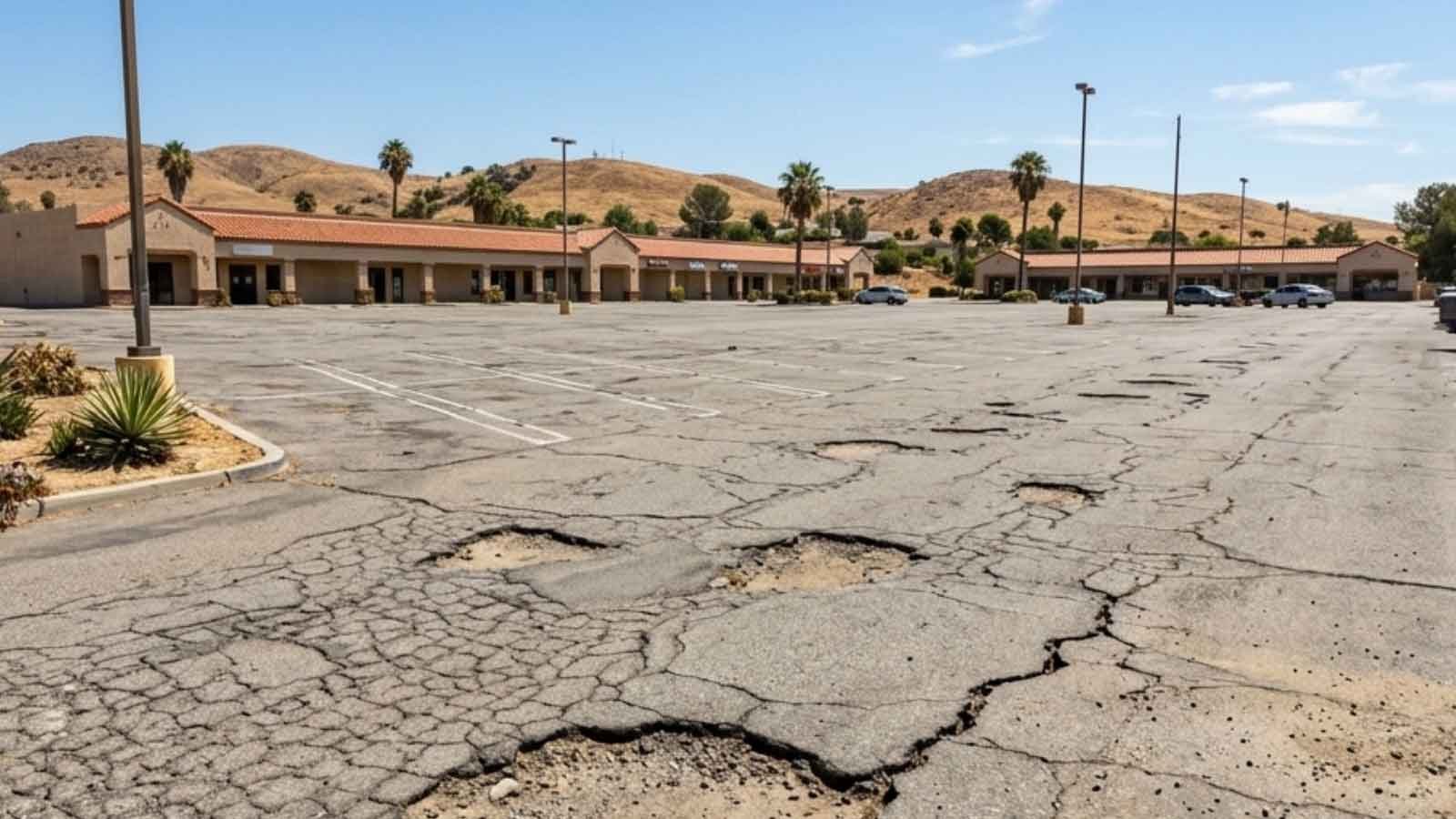
Parking lot cracks fall into two broad categories: cosmetic and structural. Cosmetic cracks affect surface appearance and can typically be managed with routine sealing. Structural cracks indicate that the pavement layers or underlying materials have lost integrity, and they require a different response entirely.
Crack shape, width, and location provide strong indicators of which category you're dealing with.
That said, visual inspection alone cannot confirm the root cause. Some conditions require professional evaluation, core sampling, or deflection testing to determine the full extent of the damage. Recognizing the difference helps you choose the right parking lot repair services before minor damage becomes a larger, more expensive problem.
Why Is It Important to Know If a Parking Lot Crack Is Structural or Cosmetic?
Cosmetic cracks affect appearance only. Structural cracks indicate the pavement layers or underlying materials have lost integrity.
The difference drives repair decisions. Cosmetic surface cracks stay contained for years. Structural cracks widen, allow water penetration, and trigger potholes, soft spots, and accelerating deterioration. Addressing issues early can significantly extend pavement life. Waiting often means replacing sections prematurely.
The cost escalation is dramatic:
- Crack sealing: $0.50–$2.00 per linear foot
- Resurfacing: $3–$5 per square foot
- Full replacement: $5–$8 per square foot
The costs shown are typical ranges for commercial parking lots in Southern California. Actual asphalt repair pricing varies based on pavement condition, repair scope, site access, project size, and current crude oil prices. Cost ranges exclude labor. Get a quote from Empire Parking Lot Services for accurate project pricing.
Early assessment helps you select the most economical repair. Property managers who delay until widespread failure occurs typically spend two to three times as much as those who intervene at early detection.
What Do Different Parking Lot Crack Patterns Mean?
The shape, width, and location of an asphalt crack suggest what's happening beneath. These indicators don't confirm structural issues but signal whether professional evaluation is needed.
Hairline and Surface Cracks
Hairline cracks appear as thin lines, typically under 1/8 inch wide, scattered across the pavement. They result from surface aging, minor movement, and oxidation of the asphalt binder.
These cracks initially allow relatively little water entry, but they widen over time if left untreated. Sealing prevents this progression and costs far less than repairing deterioration later. Most hairline cracks remain stable for several years, though pavement age, traffic volume, and maintenance history influence longevity.
Longitudinal and Transverse Cracks
Longitudinal cracks run parallel to the centerline; transverse cracks run perpendicular. Both commonly appear in aging lots due to asphalt shrinkage, reflection of underlying distress, or poor joint construction.
These usually signal pavement aging rather than immediate support failure. Sealing is appropriate if cracks remain under 1/4 inch wide and don't noticeably widen year to year. If you observe widening or increased water pooling nearby, on-site evaluation is warranted.
Block Cracking
Block cracks form a rectangular grid pattern, typically 3 to 10 feet across, caused by asphalt oxidation and shrinkage. This pattern commonly appears in 15- to 25-year-old lots that have sustained significant UV exposure.
Block cracking signals that asphalt is becoming brittle. It's not necessarily proof of a support failure, but it indicates the pavement is entering an advanced stage of aging. Scheduling asphalt sealcoating or overlay within one to two years can extend service life. Left untreated, this distress worsens, requiring more costly repairs.
Alligator Cracking
Alligator cracking appears as dense, interconnected fractures—typically 1 to 3 inches across—forming a skin-like pattern. This is the most serious visual warning you can observe.
Alligator cracking indicates fatigue failure of the asphalt layer. Multiple causes are possible:
- Weak or improperly compacted base
- Asphalt thickness insufficient for traffic loads
- Poor drainage leading to saturation
- Repeated heavy vehicle loading beyond design capacity
- Subgrade settlement or failure
Alligator cracking signals compromised support. Sealing cannot repair this damage. The affected area requires full-depth repair, complete resurfacing with support correction, or section replacement. Expert guidance is essential before selecting a repair method.
Reflective Cracking
Reflective cracks appear as lines matching cracks or joints in underlying layers. They often develop 2 to 5 years after overlay installation, indicating that lower-layer movement is transmitting through the new pavement.
Reflective cracking typically requires a thicker overlay or support stabilization. Expert assessment determines the proper approach.
What Signs Suggest a Parking Lot Crack Is Structural?
Crack appearance is only part of the picture. These six conditions suggest damage extends beyond the surface and requires more than sealing.
Water Pooling Around Cracks
Standing water near cracks after rain means water is entering underlying layers and draining poorly. Standing water softens support materials and reduces their load-bearing capacity.
After rain or irrigation, check your lot. If you see standing water adjacent to cracks or if the surface feels unstable when wet, support concerns are likely present.
Read More: What Is the Biggest Enemy of Your Asphalt Parking Lot?
Soft Spots or Sponginess
Press the pavement near cracks with your foot or drive slowly over the area. A surface that feels spongy, deflects noticeably, or yields under pressure indicates loss of base strength.
Causes include water saturation, erosion, or poor compaction. Soft spots prove that sealing alone won't restore structural capacity. The underlying system requires attention.
Edge Crumbling or Spalling
Cracking edges that are crumbling, flaking, or visibly deteriorating indicate active water-induced breakdown of the pavement and base materials. Once edge breakdown starts, broken pieces create pathways for accelerated water entry.
This condition requires repair within months. Expert assessment determines whether spot repair or area resurfacing is appropriate.
Potholes at or Near Cracks
Potholes develop when cracks penetrate the full asphalt layer, water enters the base, and traffic loads fracture weakened material. A pothole signals that localized support is lost.
Potholes require immediate repair because they grow with each vehicle pass. A single pothole in an isolated area might be spot-repaired, but multiple potholes suggest widespread support issues where overlay or replacement becomes more economical than individual repairs.
Cracks Returning After Repair
Cracks reappearing in the same spot after sealing within two to three years indicate the underlying cause was not addressed. This suggests:
- Water continues entering
- Base movement persists
- The structural problem remains
Recurring cracks signal that sealing masks the problem temporarily. Full-depth repair of the affected area or section resurfacing may be necessary.
Visible Height Differences
One side of a crack appearing higher or lower than the other signals base shift. In Southern California, possible causes include:
- Poor drainage concentrating water
- Expansive soil movement
- Utility trench settlement
- Root intrusion
- Differential settlement
Base shift indicates a structural issue requiring deeper intervention. Widespread displacement often makes replacement the most practical solution.
When Is Crack Sealing Enough?
Crack sealing is a cost-effective maintenance option when damage is limited to the surface, and the underlying materials remain intact.
Read More: Crack Sealing: What It Is and Why It's Important for Your Business
Which Parking Lot Cracks Can Be Sealed?
Your cracks qualify for sealing if they meet all these criteria:
- Narrow: Under 1/4 inch wide
- Stable: Not visibly widening year to year
- Isolated: Limited to several cracks, not widespread patterns
- No secondary symptoms: No water pooling, soft spots, potholes, or edge breakdown
- No advanced distress: No alligator cracking, block patterns, or displacement
Flexible sealant fills cracks and blocks water entry while allowing minor movement. Sealed cracks typically stay protected for three to five years.
How Often Should Parking Lot Cracks Be Sealed?
Parking lots maintained with regular sealing every three to five years often remain functional and attractive for 15 to 20 years. Regular sealing helps preserve the pavement and delay more extensive repairs.
Regular sealing is especially valuable for 5- to 15-year-old lots where cracks are emerging but advanced distress hasn't developed yet.
Read More: How Often Should I Get Parking Lot Maintenance Done?
When Do Parking Lot Cracks Require Resurfacing or Replacement?
If your lot has multiple crack types, widespread distress, or clear signs of structural deterioration, crack sealing alone won't solve the problem. When cracking covers large areas, the pavement is often deteriorating as a system rather than in isolated spots.
Resurfacing (overlaying new asphalt over the existing pavement) may be appropriate if the underlying pavement remains structurally sound. It typically costs one-third to one-half as much as full replacement and can extend pavement life by 8 to 15 years, depending on traffic, pavement condition, and maintenance. However, if alligator cracking, widespread fatigue cracking, or underlying support failure is present, full-depth repairs or replacement are usually the better long-term solution.
Read More: Is It Better to Resurface or Replace Your Parking Lot?
Why Is It Better to Repair Structural Cracks Early?
Parking lots repaired during the early stages of deterioration through targeted crack repairs or asphalt overlays can extend the pavement's service life and delay the need for full replacement. Lots left untreated deteriorate rapidly, triggering emergency pothole repairs, then overlay work, and eventually complete replacement.
The cumulative cost of reactive repair cycles often exceeds the cost of proactive resurfacing. Managers who inspect their parking lots regularly, identify problems early, and act promptly typically spend less on long-term pavement maintenance than those who wait until failures become severe.
Read More: How Much Does It Cost to Repave a Parking Lot?
How Should You Document Parking Lot Cracks Before an Inspection?
Prepare your assessment to accelerate contractor evaluation and improve the accuracy of estimates.
What to Photograph
- Overall lot crack distribution
- Individual cracks showing width and condition
- Water pooling or drainage problems
- Soft or unstable pavement areas
- Potholes, edge breakdown, or height differences
- Areas with multiple crack types
What Questions Should You Ask a Parking Lot Contractor?
Before committing to a repair, clarify:
- "What does this damage indicate about support condition?"
- "Which problem areas should I prioritize?"
- "How quickly will this deterioration spread if untreated?"
- "What are the cost differences: sealing, resurfacing, and replacement for my situation?"
- "What lifespan does each repair option provide?"
An asphalt parking lot contractor who explains findings clearly, shows the damage, and justifies their recommendations is providing the assessment you need to make a confident decision.
Frequently Asked Questions
When should parking lot cracks be sealed?
Seal cracks as soon as they appear and before they exceed 1/4 inch wide. Early sealing prevents water entry and stops progression. Repeat every 3 to 5 years as routine maintenance.
What causes alligator cracking?
Alligator cracking results from fatigue failure caused by weak base, inadequate asphalt thickness, poor drainage, heavy traffic loads, or subgrade failure. It signals that structural support is compromised.
Do all cracks mean I need to replace my lot?
No. Narrow, isolated, stable cracks managed with preventive sealing can be maintained for years. Only widespread distress typically requires replacement.
Is crack sealing worth the cost?
Yes. Crack sealing costs $0.50–$2.00 per linear foot and prevents water from reaching underlying layers, where repairs become exponentially more expensive. It's one of the most cost-effective preservation strategies.
How do I know if my lot needs resurfacing?
Key indicators include block cracking across large areas, multiple crack types covering 30%+ of the lot, potholes in different locations, widespread soft spots, and visible pooling. A professional assessment confirms whether an overlay or a full replacement is necessary.
What's the difference between crack sealing and sealcoating?
Crack sealing fills individual cracks with a flexible sealant to block water intrusion and help prevent further deterioration. Sealcoating covers the entire pavement surface with a protective coating that shields against UV exposure, moisture, and oxidation. It extends pavement life but doesn't repair existing cracks or structural damage.
Are edge cracks and utility patches a structural concern?
Yes. Edge cracks and utility patches can indicate localized structural problems, especially when they show signs of settlement or continued deterioration.
Don't Wait for Minor Cracks to Become Major Repairs
Cosmetic cracks are a maintenance issue. Structural cracks indicate emerging pavement problems. Early assessment helps you understand urgency and select the most economical repair approach.
Most cracks start as minor surface wear and can be managed with preventive sealing. Cracks showing signs of support compromise, water entry, or spreading distress require expert evaluation and often deeper repair. Acting at an early stage prevents costs from multiplying.
If you're observing concerning crack patterns in your Orange County, Los Angeles, Riverside, or San Bernardino parking lot, expert assessment can clarify your situation. Empire Parking Lot Services provides pavement condition evaluations, drainage analysis, and repair recommendations tailored to your lot's actual needs. Contact us today to schedule a site assessment.


Comments