
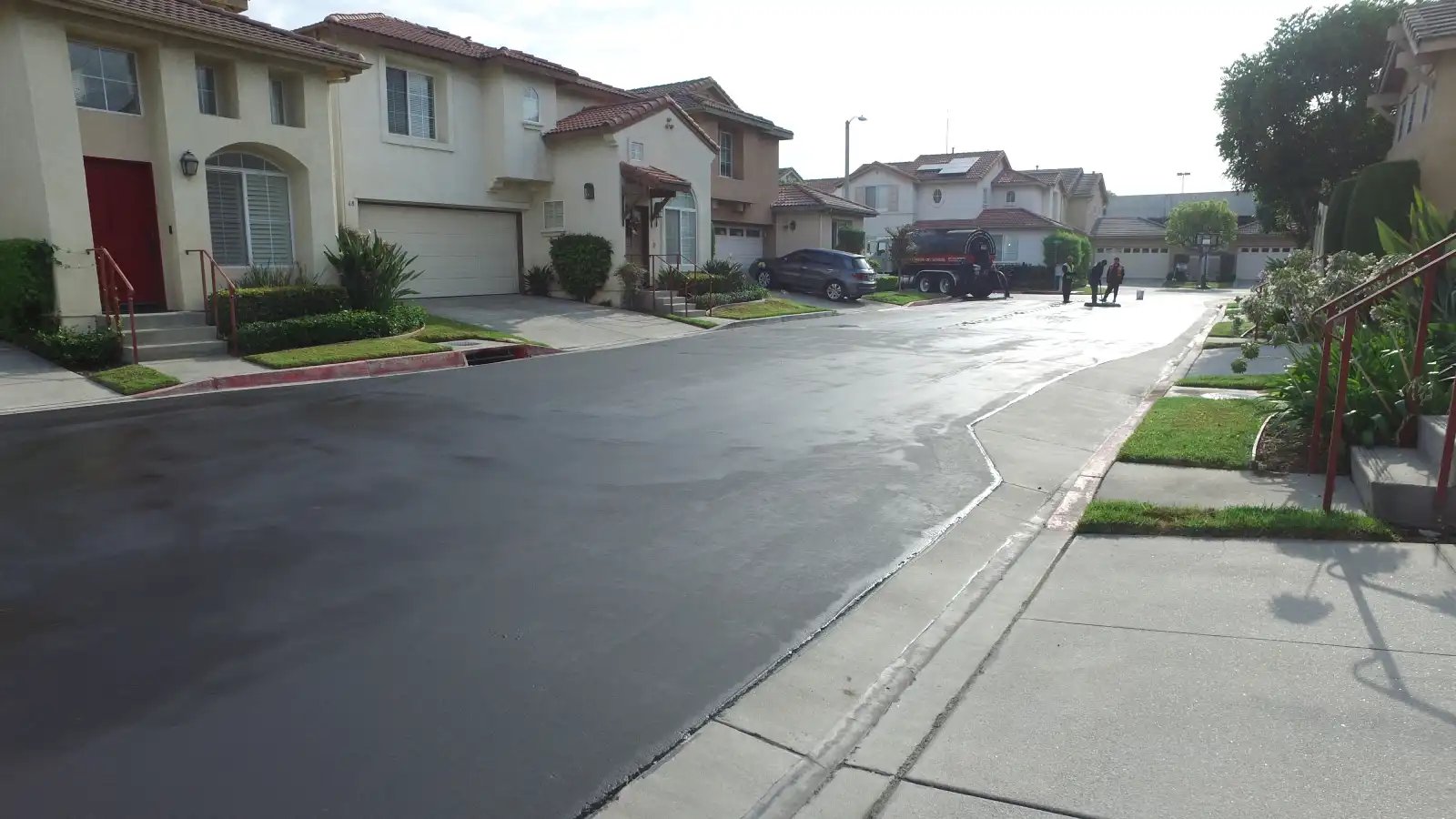
A California HOA should handle parking lot maintenance as a scheduled reserve item: inspect the pavement on a set cycle, tie crack sealing, sealcoating, and striping to the reserve study, and phase the work so residents always have a place to park. Boards that treat parking lot maintenance as a plan spend reserve funds on prevention instead of emergency repairs.
A board that plans maintenance wants a lot that lasts and a budget that holds. Homeowners want a place to park tonight and no special assessment next year. Both depend on catching pavement wear while it is still a maintenance item, not a replacement project.
Who Is Responsible for Parking Lot Maintenance in an HOA?
In most California common interest developments, the association is responsible for maintaining common area parking, including drive aisles, guest stalls, and shared lots. The Davis-Stirling Act places common area maintenance on the association unless the governing documents say otherwise, so the board carries that duty even when a management company runs the day-to-day.
Exclusive-use spaces such as deeded stalls or carports can be split differently by the CC&Rs. An HOA attorney should confirm how the governing documents divide responsibility before a scope of work goes out.
How Does a Reserve Study Affect HOA Parking Lot Maintenance?
The reserve study is where parking lot maintenance gets funded. Under California Civil Code Section 5550, the board must have a visual inspection of major components done at least once every three years and review the study annually. Asphalt pavement is usually one of its largest components.
If the study plans for replacement in year 20 but the lot is cracking and oxidizing in year 8, the funding plan is already wrong. A contractor's condition assessment gives the reserve specialist real data, and knowing how long an asphalt parking lot lasts helps the board judge whether the study's timeline is realistic.
What Maintenance Does an HOA Parking Lot Need?
An HOA parking lot needs four recurring services: crack sealing, sealcoating, striping, and an overlay when patching stops keeping up with wear.
Asphalt Crack Sealing Before the Rainy Season
Crack sealing keeps water out of the aggregate base, where most pavement failure starts. Late summer and early fall are the natural window to seal before Southern California's first storms.
Once cracks connect into a pattern across a section, sealing no longer protects it and the money belongs in repair. Routine asphalt crack sealing on isolated cracks is the least expensive way to extend the life of the lot.
Asphalt Sealcoating Every 3 to 5 Years
Sealcoating protects asphalt from the UV exposure and oxidation that turn a dark lot gray and brittle under the Southern California sun. Most HOA lots benefit from asphalt sealcoating every 3 to 5 years, applied after crack sealing.
Sealcoat needs 24 to 48 hours before vehicle traffic depending on temperature and humidity, which is the main scheduling challenge in a residential community. Is sealcoating a parking lot worth the investment? walks through when it pays off.
Parking Lot Striping and Fire Lane Markings
HOA striping covers guest stalls, accessible stalls, fire lanes, and red curbs. Lines last approximately 2 years depending on traffic and conditions, and Empire Parking Lot Services can stripe on a dried sealcoat the same day when weather allows.
Accessible stalls near a clubhouse, pool, or leasing office should be checked against current ADA and California Title 24 standards before repainting, since restriping an outdated layout carries the old problem forward. Before restriping accessible stalls, boards should obtain a CASp report; Empire performs ADA upgrades to spec but does not conduct compliance surveys. Pairing parking lot striping with the sealcoat cycle saves residents a second closure.
Asphalt Overlay When Patching Stops Working
An overlay is the step between repeated patching and full replacement. A portion of the existing asphalt is ground down first, then a new 2 to 3 inch layer is applied so the finished surface meets curbs, garage aprons, and drains at the original grade.
An asphalt overlay typically lasts 8 to 15 years, which makes it a reserve item associations can plan well in advance. When the same sections need patching every year, that money belongs in an overlay.
What Does HOA Parking Lot Maintenance Cost in California?
Material costs for common HOA parking lot services fall in these ranges:
- Crack sealing: $0.50 to $2.00 per linear foot
- Sealcoating: $0.25 to $0.75 per square foot
- Parking lot striping: $0.10 to $0.30 per linear foot
- Asphalt overlay (2 inch): $3 to $5 per square foot
Prices exclude labor costs. Material costs are based on current pricing in California as of 2026. Pricing is subject to change as crude oil prices fluctuate. These ranges are a starting point for the reserve study, not a quote.
How Can an HOA Schedule Parking Lot Work Without Displacing Residents?
An HOA keeps residents parked by phasing the work, closing one section at a time for only the cure time it needs. Most single-service projects finish in one day.
Residents need written notice of which section closes, when it reopens, and where to park in the meantime. The board should settle the towing policy for closed sections before that notice goes out.
Plan Your HOA Parking Lot Maintenance With a Southern California Team
Community association managers across Orange, Los Angeles, Riverside, and San Bernardino counties work with Empire Parking Lot Services to turn reserve study line items into a schedule the board can approve. If the lot needs crack sealing and a sealcoat, that is what we recommend. If patching would only delay an overlay, we say so before the board commits reserve funds to work that will not hold.
Every project starts with a pre-production site walk with the property manager, our estimator, and our production manager. Experienced foremen oversee the work, and our team tells the community where, when, and how long before each phase, so resident notices carry accurate dates. We review weather weekly and call at least one week before unfavorable weather is expected.
End-of-project photos and videos are available on request for the board's records. We have served Southern California since 2008 under CSLB license #1098884.
Call 877.760.2757 to schedule a site walk, or request a free estimate for parking lot maintenance in your community.
Frequently Asked Questions
How often should an HOA sealcoat its parking lot?
Every 3 to 5 years, as long as cracks are sealed first. Lots with full sun and steady traffic sit toward the shorter end.
Does an HOA parking lot need to be in the reserve study?
In most cases, yes. California requires the study to cover major components the association must repair, replace, or maintain with a remaining useful life under 30 years, and common area pavement typically qualifies.
How long does an HOA parking lot last?
A fully replaced lot lasts 20 to 25 years with regular maintenance. An overlay typically lasts 8 to 15 years over a sound aggregate base.
How long do residents need to keep cars off fresh sealcoat?
Sealcoat needs 24 to 48 hours before vehicle traffic depending on temperature and humidity. Freshly paved asphalt needs 48 to 72 hours.
Is parking lot maintenance paid from reserves or the operating budget?
Routine items such as spot crack sealing and minor restriping often come from the operating budget, while sealcoating, overlays, and replacement are usually reserve components. The reserve specialist and the association's CPA should confirm each classification.


Comments