Sealcoating is generally worth the investment when the asphalt underneath remains structurally sound, and maintenance happens on schedule. On a lot that has already failed, the same treatment wastes money. Most of the online debate comes down to that distinction, though pavement performance depends on more variables than any single rule can capture.
You have probably read the counterargument: sealcoating is cosmetic, contractors push it to pad invoices, and the budget belongs elsewhere. That claim is accurate in one specific situation and misleading in most others, and knowing when sealcoating works starts with understanding the condition of the pavement.
Why Do Some Say Sealcoating Is Pointless?
Critics of sealcoating usually point to parking lots where the coating failed to improve cracked or deteriorated pavement. They're right that sealcoating cannot repair structural damage. The misconception is assuming it was designed to. Sealcoating is a preventive maintenance treatment that protects healthy asphalt, not a repair method for pavement that has already failed.
Where the Criticism Holds Up
Sealcoating a failed lot accomplishes very little. When asphalt shows alligator cracking, widespread potholes, or base failure, the damage lives below the surface. A sealcoat is measured in fractions of an inch. It cannot reach the base, restore load-bearing strength, or stop water already moving beneath the pavement.
Contractors who coat failed lots anyway give the service a bad name. The property manager pays for a fresh black finish, the cracks telegraph back through within months, and the takeaway becomes "sealcoating is a scam." The more accurate takeaway: it was the wrong treatment for that lot, and an honest contractor would have said so before taking the check.
Where It Breaks Down on Sound Pavement
On pavement with a stable base, the story changes. Sound asphalt deteriorates in a sequence, and that sequence starts at the top.
UV exposure oxidizes the binder that holds pavement together. Oxidized binder loses flexibility and begins to ravel, shedding fine aggregate and opening small cracks. Moisture infiltrates those cracks, repeated traffic loading pushes it deeper, and the base gradually weakens. A weakened base flexes under load until fatigue cracking, the familiar alligator pattern, appears where everyone can see it.
Sealcoating intervenes at that first stage. It shields the binder against UV damage, sheds water before it penetrates, and resists the oil and fuel drips that gradually break down the pavement surface.
How Do Contractors Decide If a Lot Qualifies for Sealcoating?
The worth-it question turns on what a site walk reveals, so it helps to know what a contractor actually checks. A lot is typically a strong sealcoating candidate when:
- Cracking is isolated and narrow rather than interconnected
- There is no alligator (fatigue) cracking in drive lanes or loading areas
- The pavement shows no settlement, depressions, or signs of pumping, where water is forced upward through cracks as vehicles pass
- The base feels stable under load, with no visible flexing or movement
- Drainage carries water off the lot instead of letting it pool
A lot that passes this inspection gains real value out of a sealcoat. Any contractor who quotes the work without walking the pavement and checking crack conditions is selling paint, not maintenance.
A site assessment identifies the pavement's condition and helps determine if sealcoating is the right solution or if repairs should come first. Contact Empire Parking Lot Services today to schedule yours.
What Are the Disadvantages of Sealcoating?
An honest answer includes the drawbacks. Sealcoating has real limitations, and much of its bad reputation traces back to jobs that ignored them.
Crack Sealing Comes First
Sealer goes on as a thin preservative layer, so open cracks need dedicated attention before it is applied, which is why crack sealing must come before sealcoating. Coating over unsealed cracks hides the entry points without closing them, and water keeps working out of sight.
Crack sealing is typically a modest line item relative to the sealcoat itself, and most estimates bundle the two so you see one number for the full scope of work. The same sequencing applies to potholes, raveling, and drainage problems: address the damage, then seal.
Weather, Workmanship, and Product Quality
When a sealcoat job fails early, the cause usually traces to one of three preventable mistakes:
- Coating over cracks that were never sealed, which lets water bypass the new layer on day one
- Applying in rain or below the manufacturer's recommended application temperature, which interrupts the sealer's bond before it cures
- Using bargain-grade, watered-down emulsion products that wear off within a season
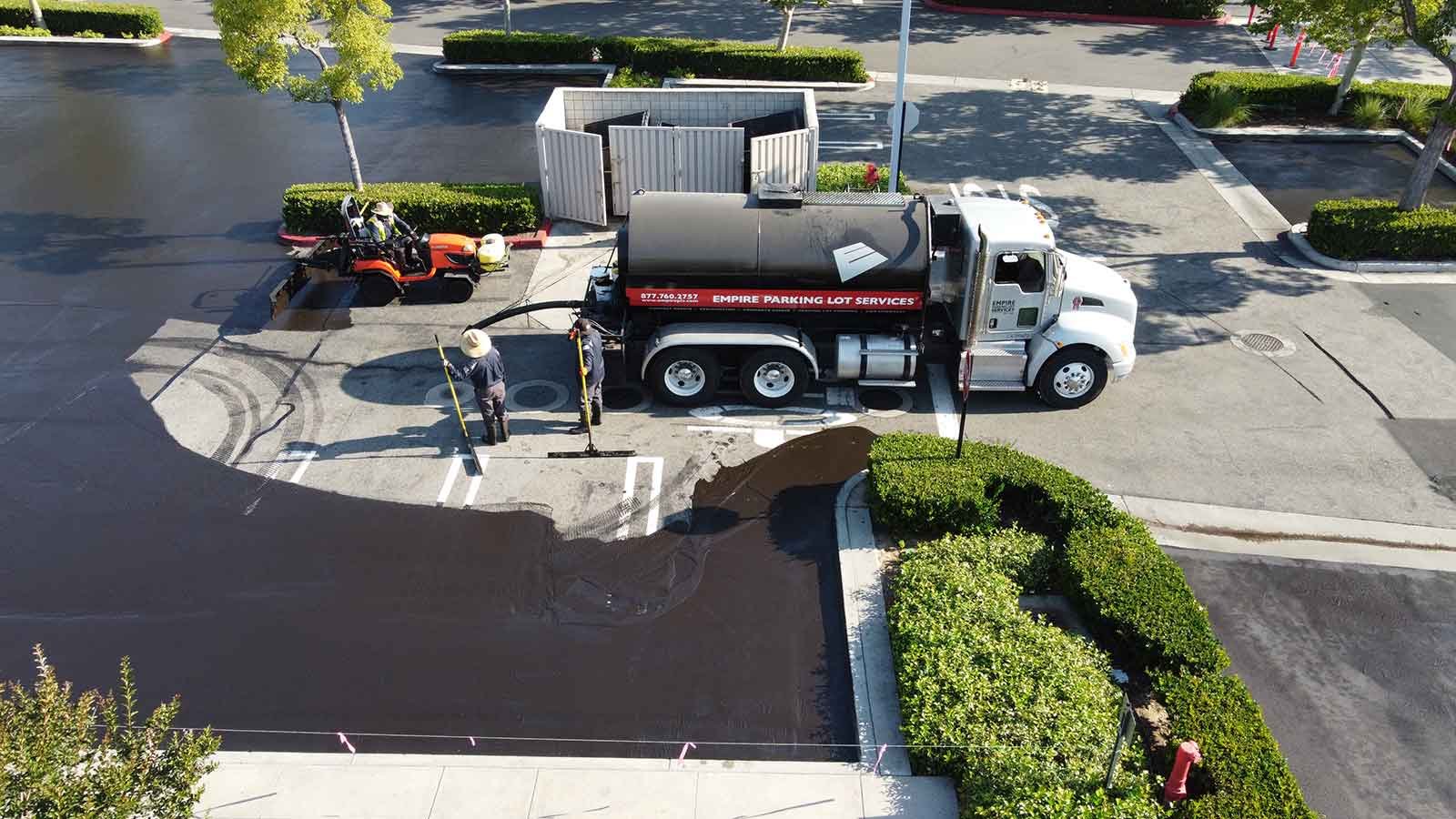
None of those failures indicts sealcoating itself. Each one indicts the job. Empire monitors weather before and during every project and postpones application when rain, excessive humidity, or a temperature drop threatens adhesion or curing quality. That discipline costs some scheduling flexibility and saves clients the expense of a coat that peels, streaks, or washes into the storm drain.
Application method matters too. Our breakdown of how sealcoat is applied explains why squeegee application typically works sealer deeper into the pavement and when spray becomes the practical choice.
How Much Does Sealcoating a Parking Lot Cost?
Treat the figures below as an illustration rather than a quote or a prediction of savings.
A 15-Year Lifecycle Example
Picture a mid-size Orange County lot where each sealcoat application runs $3,500. On a 3-year cycle across 15 years, that totals $17,500 in planned maintenance spending.
Now compare that with an unmaintained lot. Faster deterioration can shorten its service life, bringing reconstruction years earlier than expected. A comparable property might require full replacement around year 10 instead of closer to year 20. A full reconstruction on a comparable property can run in the neighborhood of $60,000.
On paper, the gap between those two paths is $42,500. The comparison illustrates how planned maintenance spreads pavement costs over time instead of concentrating them into a single major capital expense.
This is an illustrative example only, not a quote or projected savings figure. Actual sealcoating costs depend on lot size, pavement condition, prep work required, and current materials pricing, which fluctuates with crude oil markets. This figure excludes labor. Request a current estimate for numbers specific to your property.
What the Cost Comparison Does Not Capture
Two benefits sit outside the math. Fresh sealcoat restores the dark finish that makes line striping legible, which supports ADA visibility and clear traffic flow in the areas where pedestrians and vehicles mix.
The lot is the first thing every tenant, customer, and prospective buyer sees, too. A gray, patchy lot signals deferred maintenance before anyone reaches the front door. Property managers overseeing retail centers or HOA communities know how directly that perception affects renewals and complaints.
How Often Should a Parking Lot Be Sealcoated?
Every 3 to 5 years is the standard for commercial lots. Where your property lands inside that range depends on climate, traffic load, and how the previous coat has held up.
How Long Does Sealcoating Last and When Should You Reapply?
A sealcoat's lifespan and its reapplication schedule are the same window, so the coat's condition, not the calendar alone, tells you when the next application is due. Wear shows first in drive lanes, entrances, and anywhere tires turn against the pavement, so those areas are the practical gauge for timing the next application. When the black finish fades to gray in high-traffic paths, the coat is reaching the end of its useful life, and the next one is due.
Why Orange County Lots Trend Toward the 3-Year End
UV oxidation is the main clock on sealcoat performance, and this region runs that clock quickly. Southern California's consistently high UV exposure and hot pavement accelerate binder breakdown compared with lots in cooler markets. Traffic compounds the effect: delivery trucks, commuter turnover, and constant wheel friction grind at the coating season after season. For many commercial properties across Orange, Los Angeles, Riverside, and San Bernardino counties, planning toward the 3-year end of the range keeps maintenance ahead of deterioration.
Scheduling, Cure Time, and Downtime
Summer is the prime sealcoating window in Southern California. Warm, dry days let the coat cure evenly and carry the lowest rain risk on the calendar.
Downtime is a fair concern for any commercial property. Sealer typically requires 24 to 48 hours of curing before vehicle traffic returns, depending on product, temperature, and humidity, and the reopening plan should be part of the estimate so tenants can be notified in advance. New pavement requires a waiting period before it can accept sealer — typically at least three months in Southern California conditions. Applying sealer too early traps off-gases from the curing asphalt and prevents proper adhesion. Our guide on when new asphalt is ready to sealcoat covers the timing in detail.
Get a Straight Answer About Your Lot
Empire Parking Lot Services has maintained commercial asphalt across Orange, Los Angeles, Riverside, and San Bernardino counties since 2008 under CSLB License #1098884. We assess your lot and recommend only the work its condition actually supports. Learn more about our parking lot maintenance services or request a free estimate by calling 877.760.2757.
Frequently Asked Questions
Do you need to restripe after sealcoating?
Yes. Sealcoating covers existing line markings, so restriping is required after every application. The good news is that Empire can apply fresh striping the same day as the sealcoat, provided the coat has had sufficient time to dry and weather conditions allow. Bundling both services in a single mobilization reduces downtime and avoids scheduling a second closure for your tenants.
Can you sealcoat too often?
Yes. Applying sealer more frequently than every three years allows layers to accumulate and become brittle over time, which can lead to peeling and flaking rather than protection. The standard reapplication cycle exists for a reason: it gives the previous coat time to wear appropriately before a new layer goes on.
Is sealcoating worth it for a commercial parking lot?
Generally yes, when the pavement remains structurally sound and the coating goes on schedule. It delays far larger repair costs. Lots with fatigue cracking or base damage need repair before sealing delivers any value.
What are the disadvantages of sealcoating?
It cannot repair existing damage; it depends on correct weather conditions to cure, and results vary with product quality. Jobs fail when contractors coat over unsealed cracks, apply in poor conditions, or use watered-down material.
How often should a parking lot be sealcoated in Southern California?
Every 3 to 5 years, with many local lots trending toward the 3-year end because intense sun and hot pavement wear the coating down faster than cooler climates do.
How much does sealcoating a parking lot cost?
Cost varies with lot size, pavement condition, and prep work such as crack sealing, and materials pricing moves with crude oil markets. Empire Parking Lot Services provides free estimates so you get an accurate, current number for your property.
How long does sealcoating last?
A quality application typically holds up for three to five years. High-traffic drive lanes and entrances wear first and serve as the practical signal that reapplication is due.
Does sealcoating prevent potholes?
It helps prevent them by keeping water out of the pavement, but it cannot fix potholes that already exist. Those need patching first.


Comments