
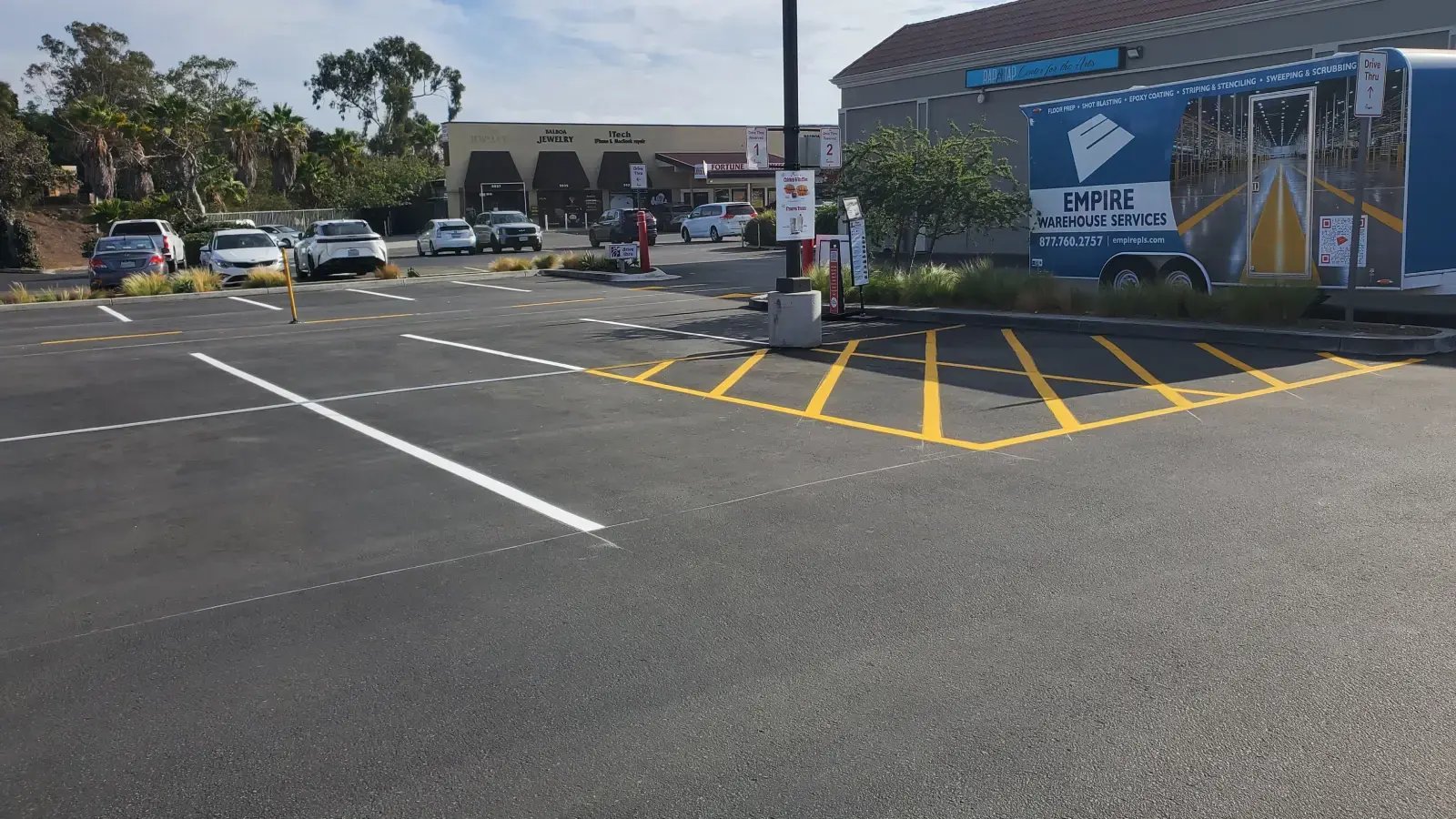
Parking lot striping typically costs $0.10 to $0.30 per linear foot, with the final price set by total footage, the scope of work (a restripe or a full re-layout), and how many stencils, curbs, and accessible stalls are involved. These figures reflect 2026 California material costs, exclude labor, and are subject to change as crude oil prices fluctuate. Those factors decide where a parking lot striping quote lands in the range.
Striping is one of the smaller items in a maintenance budget and the first thing visitors actually see. Worn stall lines shrink usable capacity, faded arrows send drivers the wrong way down an aisle, and a fire lane nobody can read is a safety issue, not a cosmetic one. Striping lasts about 2 years depending on traffic and conditions, so the real budgeting question is how to pay for it well on a repeating cycle.
What Affects the Cost of Parking Lot Striping?
Linear footage sets the baseline, and scope moves the number from there. Two lots of the same size can price very differently.
|
Scope |
What drives the price |
|
Restripe over existing lines |
Linear footage and number of stencils |
|
New layout or re-layout |
Measuring, a new striping plan, and covering old lines that no longer apply |
|
Accessible stall updates |
Symbols, access aisles, signage, and current code requirements |
|
Curb painting |
Linear feet of curb and number of color zones |
|
Multi-service projects |
Sequencing with sealcoating or repairs, which may require more than one mobilization |
Linear Footage and Lot Layout
Restriping follows lines that are already there, so it prices mostly on footage. Larger lots, longer drive aisles, and more stall rows all add footage. A new layout adds measuring and planning time on top of that, which the next section explains.
Stencils, Symbols, and Curb Painting
Arrows, stop bars, crosswalks, and stenciled words such as COMPACT, RESERVED, and LOADING ZONE each add time beyond straight lines. Curb painting follows California color codes: red for no stopping, yellow for loading, white for passenger drop-off, blue for disabled persons, and green for timed parking. Empire Parking Lot Services sprays curb paint rather than rolling it, which lays down a thicker, more even coat.
Accessible Stall Markings
Accessible stalls carry more requirements than a standard space: the symbol, the striped access aisle, and the signage all have to meet ADA and California Title 24 standards. Professional handicap striping services confirm those elements during the layout check rather than repainting the existing markings without a compliance review.
Surface Condition and Prep
Paint is only as good as the pavement under it. Debris has to be removed and active cracks treated first, and asphalt crack sealing before striping keeps new lines from splitting along old damage. Striping over pavement that is failing underneath spends money on a surface that will not last, and understanding how long an asphalt parking lot lasts helps you decide if striping should happen now or after the repair.
What Is the Difference Between Restriping and a Re-Layout?
Restriping applies fresh paint to the lot’s current configuration, tracing the stalls, arrows, and markings already in place. A re-layout starts over: the crew measures stalls, accessible spaces, and fire lanes, then prepares a new striping plan before any paint goes down. Old lines that no longer apply are covered so drivers aren’t confused by two sets of markings.
Owners who are changing traffic flow or adding compact stalls should expect that planning step to be reflected in their project estimate.
When a Restripe Is Enough
A restripe usually makes sense when the current layout still works. If stall counts fit the property’s needs, traffic moves smoothly, and accessible spaces already meet current standards, refreshing the existing lines keeps costs down.
How Often Should a Parking Lot Be Restriped?
Most commercial lots need restriping about every 2 years, sooner in high-traffic aisles and areas with full sun exposure. Southern California UV fades paint steadily, so stop bars and crosswalks usually go first.
Pairing striping with the sealcoat cycle is the most efficient approach. Sealcoating every 3 to 5 years protects the asphalt, and Empire Parking Lot Services can stripe on a dried sealcoat the same day when weather allows. Sealcoating typically costs $0.25 to $0.75 per square foot. This range uses 2026 California material costs, leaves out labor, and can shift with crude oil pricing.
Combining the two avoids a second mobilization and leaves the lot with fresh lines on a fresh surface. Pavement condition determines when adding sealcoating to the cycle makes sense. Is Sealcoating a Parking Lot Worth the Investment? covers how to make that call based on what your lot shows.
What Type of Paint Is Used for Parking Lot Striping?
Empire Parking Lot Services uses water-based traffic paint for all outdoor parking lot striping. It dries in approximately 2 hours, which keeps closures short and lets most lots reopen the same day.
Choosing the right material is only half the equation. Application conditions determine how well it adheres and how long it holds. Empire will not stripe in the rain, reviews the forecast weekly, and contacts customers at least one week before unfavorable weather is expected to affect the schedule.
Request a Parking Lot Striping Estimate in Orange County
Retail, office, industrial, multifamily, and HOA properties across Orange, Los Angeles, Riverside, and San Bernardino counties rely on Empire Parking Lot Services for striping that is laid out correctly the first time. If a lot only needs a restripe, that is what we quote. If the layout or accessible stalls no longer meet current standards, we say so before the paint goes down.
Every project starts with a pre-production site walk with the customer, estimator, and production manager. Experienced foremen oversee the work, our team tells you where, when, and how long before each phase, and end-of-project photos and videos are available on request. We have served Southern California since 2008 under CSLB license #1098884.
Request a free estimate for parking lot maintenance on your property, or call 877.760.2757.
FAQs
How long does parking lot striping take?
Most single-service striping projects finish in one day. Water-based traffic paint dries in approximately 2 hours, so traffic can usually return the same day.
How long does parking lot striping last?
Approximately 2 years, depending on traffic and conditions. Drive aisles, entrances, and stop bars wear faster than stall lines.
Can a parking lot be striped right after sealcoating?
Yes. Striping can be applied once the sealcoat has fully dried, often the same day when weather allows.
How far in advance should parking lot striping be scheduled?
During the busy season, plan on 2 to 3 weeks of lead time. Smaller striping projects can sometimes be scheduled the same week if a team is available.
Is parking lot striping an operating expense?
Generally yes, because restriping maintains existing markings rather than adding value to the asset. A CPA should confirm the treatment for your property.
Can I restripe only part of my parking lot?
Yes. Owners sometimes refresh only the highest-wear areas, such as drive aisles, entrances, stop bars, and crosswalks, between full restripes. New paint may look brighter than nearby older lines until the rest of the lot is refreshed.


Comments