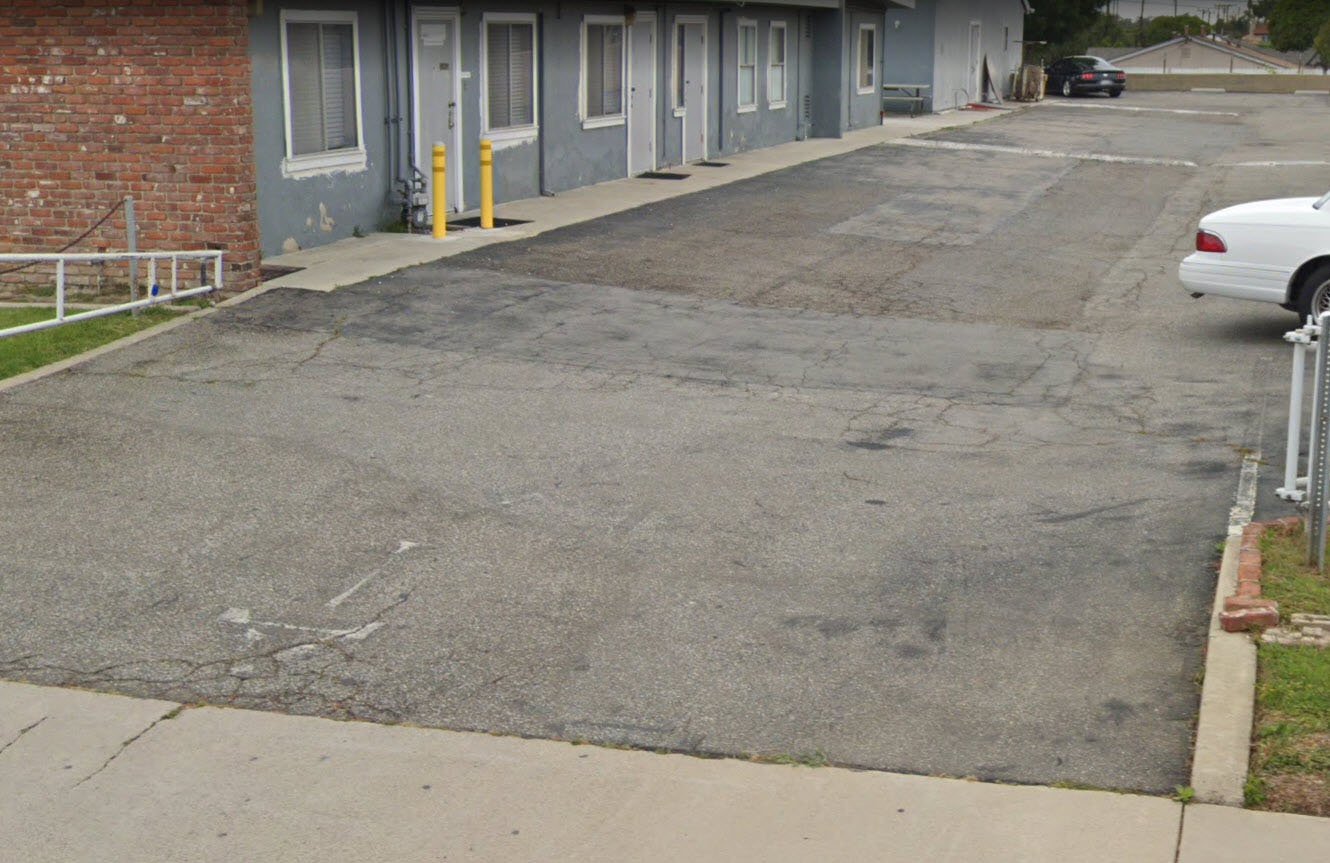
Your parking lot takes a daily beating and needs immediate asphalt repair. Vehicle traffic, UV exposure, oil drips, and Southern California's seasonal temperature swings all work against the pavement over time. The surface doesn't fail overnight, but it does send signals well before it reaches the point of full replacement.
Knowing how to read those signals and understanding how urgent each one is saves you money and keeps your property safe.
How Asphalt Repair Benefits Your Business
There is much more to parking lot maintenance than aesthetics. A well-maintained pavement communicates to your clients and customers that you care about their well-being, which can positively impact your business.
On the other hand, a poorly maintained pavement can be hazardous to pedestrians and vehicles. If a pedestrian trips and falls or a car is damaged as a result of faulty asphalt pavement, you could be looking at lawsuits for injuries and damages, which can be costly.
How to Grade the Severity of Parking Lot Damage
Not every crack means the same thing. A surface-level scuff and a structural failure both show up as "damage," but they call for completely different responses. This five-level severity scale gives you a practical way to assess what you're looking at and what action it warrants.
|
LEVEL |
NAME |
WHAT YOU SEE |
RECOMMENDED ACTION |
|
1 |
Cosmetic / Surface Wear |
UV fading, surface oxidation, light texture loss |
Sealcoating |
|
2 |
Early Crack Formation |
Hairline or block cracks, no base involvement |
Crack sealing |
|
3 |
Active Deterioration |
Alligator cracking, pooling water, and crumbling edges |
Localized patching or asphalt overlay |
|
4 |
Structural Compromise |
Potholes, sinkage, undermining, buckling |
Mill-and-overlay or targeted removal and replacement |
|
5 |
End-of-Life |
Pervasive failure across the lot |
Full removal and replacement |
Each sign below is tagged with its corresponding severity level so you know exactly where your parking lot stands.
1. Alligator Cracks
As the name implies, alligator cracks resemble the cracks on the skin of a reptile. They are also referred to as fatigue cracking and are usually shallow. They indicate a structural failure in your pavement's foundation that causes it to cave in and crack under pressure.
If you notice cracks developing on your pavement, the general rule is to apply a sealant to prevent further damage. The only sure way to correct alligator cracks in the long term is to dig down and fix the problems at the base.
Severity: Level 3–4. Alligator cracking with an intact base may be addressable with a localized overlay. If the base has failed, expect removal and replacement in the affected zone. Empire's team assesses both the surface and the subgrade to provide you with an accurate scope.
Read More: https://www.empirepls.com/blog/sealcoating-used-fill-cracks
2. Potholes
Potholes result from the contraction and expansion of water that finds its way into the ground underneath the pavement. The contraction and expansion of the trapped moisture create weak spots on the asphalt's surface, causing it to chip under pressure, creating small potholes.
When left in disrepair, potholes can become large and cause accidents. Fix potholes early before they lead to problems.
Severity: Level 4. Potholes are structural, not cosmetic. Leaving them unfilled accelerates surrounding damage and creates liability exposure.
3. Pooling Water
Pooling water refers to puddles that can remain on your pavement for days. The primary cause is improper leveling of the asphalt layer. Puddles may appear harmless, but they can be destructive to your pavement. If water seeps through a crack into the pavement base, it can destabilize the pavement, leading to other problems.
If you notice pooling on your property’s pavement, have it sealed as soon as possible. Your contractor may recommend raising the affected area with a layer of hot asphalt mix or digging it out to fix the underlying problem.
Severity: Level 2–3. Minor pooling caught early can be addressed with regrading or a targeted hot-mix layer. Pooling that has persisted long enough to soften the base escalates to Level 4.
4. Faded Color
A faded color usually indicates that your pavement is aging. Older pavements are more susceptible to damage because they are typically brittle. The brittleness results from extended exposure to direct sunlight and other natural elements such as rain and cold weather. Southern California's UV index ranks among the highest in the continental U.S., which means asphalt binder breaks down faster here than in most markets. A lot that looks 'just faded' in Orange County may be significantly more brittle than its appearance suggests
In some cases, sealcoating can be enough to extend your asphalt pavement's lifespan. Or, your contractor could recommend replacing it altogether.
Severity: Level 1. Fading is the earliest actionable warning in Southern California's climate. UV rays break down the asphalt binder faster here than in most U.S. markets, and Level 1 asphalt sealcoating is significantly less expensive than waiting for cracks to form.
5. Crumbling Edges
If your parking lot is not protected on the edges by curbs or concrete gutters, you may notice signs of crumbling around the edges. When left in disrepair, the edges can break apart, creating debris that is hazardous to users and requires asphalt repair. Your asphalt repair contractor will need to remove the chipped edges and replace them to restore the crumbling edges. It is advisable to install curbs or concrete gutters on the edges to avoid future chipping.
Severity: Level 2–3. Edge deterioration is preventable and, at early stages, repairable without full perimeter work. Curbing adds long-term protection after repairs are made.
6. Block Cracking
Block cracking is identifiable by large interconnected, mostly rectangular-shaped crack patterns. It is usually the result of asphalt shrinkage due to temperature changes. This cracking is not load-associated and is common in older asphalt pavements that are typically brittle. In new asphalt installations, block cracking indicates a poor binder choice or a problem with the asphalt manufacturing process. If the cracks are minor, a sealant would be ideal for asphalt repair. Larger cracks that are more than half an inch across will require replacing the asphalt layer altogether.
Severity: Level 2–3. Narrow block cracks respond well to crack sealing and repair. Wider gaps that have allowed water intrusion may require a mill-and-overlay to restore a stable surface.
7. Undermining
Sometimes installations beneath your parking lot, such as pipes, can crack or crumble under pressure, undermining the stability of the ground surface above them. When the strength of the ground beneath your asphalt layer is compromised, it causes the pavement's surface to cave in under pressure, resulting in parking lot problems. To address the undermining issues, your contractor will need to dig down to the problem area, repair it, and then replace the damaged asphalt base.
Severity: Level 4–5. Undermining is one of the more serious failure modes because the problem originates below the asphalt, not on it. Surface repairs applied over an undermined base fail quickly. A proper fix requires excavation to the depth of the problem.
8. Buckled Asphalt
Buckled asphalt is mainly a result of heavy vehicle use. Depending on your pavement's strength, it would be best to have a designated parking or driving area for heavy trucks to avoid further damage. Where the damage is minimal, adding an extra asphalt layer to raise the sunken spot will suffice. Extensive damage will require the complete replacement of your asphalt base in the affected area.
Severity: Level 3–4. Minor rutting caused by heavy vehicles can be corrected with a localized overlay. Widespread buckling affecting traffic lanes typically warrants full-section removal.
9. Sinkage
Sinkage occurs when the compacted stone base holding up your asphalt pavements begins to erode. It can result from improperly installed drainage systems and soil erosion. In many instances, sinkage indicates that your establishment's premises may be depositing water near your pavement, compromising the integrity of the pavement's base. Addressing your premises' drainage issues can be an excellent step towards addressing the problem. Once you have the draining problem resolved, you can have the affected spots repaired to eliminate pooling problems.
Severity: Level 4. Sinkage rarely resolves on its own. The drainage issue driving it must be corrected first, or any asphalt repair will fail prematurely.
10. Tree Root Heaving
Orange County's mature landscaping is one of the region's defining features, creating a parking lot maintenance challenge less common in other markets. Established trees, particularly large shade species common in OC commercial properties, produce root systems that extend well beyond the canopy line. When those roots reach the asphalt subgrade, they push upward over time, creating raised ridges, cracked sections, and uneven surfaces that pose trip hazards and risk vehicle damage.
Tree root heaving is identifiable by raised or buckled sections of pavement that follow a linear path consistent with nearby tree lines. Unlike other forms of structural failure, the cause is active and ongoing. Repairs that don't account for root management tend to recur.
Remediation options depend on root depth, species, and proximity to the tree. In some cases, roots can be redirected with root barriers during repaving. In others, the affected section requires removal and replacement, combined with a root management plan coordinated with a landscaping professional.
Severity: Level 3–4. Caught at the ridge-forming stage, tree root heaving is addressable with targeted removal and replacement of the affected section. Left unaddressed, continuous root growth will rebreak any surface repair.
Frequently Asked Questions About Parking Lot Repair
How do I know if my parking lot needs repair or replacement?
The answer comes down to what's failing: the surface or the base. Surface failures like fading, block cracking, and minor edge deterioration are typically repairable with sealcoating, crack sealing, or an overlay. Structural failures involving potholes, sinkage, buckled pavement, or widespread alligator cracking often indicate base damage that requires removal and replacement. An on-site assessment from a licensed contractor is the most reliable way to determine scope, because two lots with similar surface appearance can have very different subgrade conditions.
Read More: Is It Better to Resurface or Replace Your Parking Lot?
How long does an asphalt parking lot last?
A properly installed and maintained commercial asphalt parking lot typically lasts 15 to 25 years in Southern California. That range depends heavily on maintenance history. Lots that receive sealcoating every 3 to 5 years, prompt crack sealing, and timely pothole repair consistently reach the higher end of that range. Lots that go without preventive maintenance often show structural failure within 10 to 15 years. SoCal's UV intensity accelerates surface oxidation faster than cooler climates, making sealcoating more important here than in most regions.
Read More: How Long Does an Asphalt Parking Lot Last?
What does a failing parking lot look like?
A failing parking lot shows some combination of the following: widespread alligator cracking across multiple zones; potholes forming or recurring after repair; visible sinkage or depressions that hold standing water; buckled or raised sections from root heaving or base movement; and pavement that crumbles at the edges rather than holding a clean line. One or two isolated signs suggest localized repair. Multiple signs appearing across the lot simultaneously indicate that the pavement is approaching the end of its life.
Let Trusted Asphalt Paving Experts Assess Your Lot
If you're noticing any of the signs above, the next step is a professional assessment. Before any work begins, our team conducts a pre-production site walk of your entire lot, documenting cracking patterns, drainage issues, base soundness, and zone-by-zone severity with photos and notes. You'll know exactly what you're working with before a scope of work is written.
Throughout your project, we keep you informed about when, where, and how long each phase of work will run so your tenants and operations stay on schedule. When the work is done, end-of-project photos and videos are compiled and sent to you upon request, providing a documented record of conditions before and after.
Empire Parking Lot Services has been serving commercial properties across Orange County, Los Angeles County, Riverside County, and San Bernardino County since 2008. Call 714-633-0300 to get a quotation and have our team evaluate your pavement and recommend the right scope of work for your lot. You can also contact us online.
Empire Parking Lot Services is a licensed contractor (CSLB #1098884), so your project is handled by a qualified, compliant team from start to finish.


Comments